Why Every Software Project Needs a Prototype First
The reason for our software excellence — our method. Successful software projects start with clarity, not code.
The biggest risk is not the technology — it is building the wrong thing
Many small business owners believe that software development starts with coding. In reality, successful software projects start with clarity. The biggest risk in software development is not the technology itself — it is building the wrong thing, misunderstanding requirements, or discovering important problems too late.
This is exactly why we always begin with a prototype phase before full development.
What is a Prototype?
A prototype is an interactive visual version of your software. It is not the final product and it is not "just a design." It is a working simulation of the application that allows you to understand, test, and refine every detail before development begins.
Think of it like creating the architectural plan before building a house. No serious builder would start construction without first agreeing on the blueprint. Software is exactly the same.
- See how the software will work
- Test workflows before development
- Define every feature clearly
- Adjust the system while changes are still inexpensive
- Ensure both client and developer fully understand the project
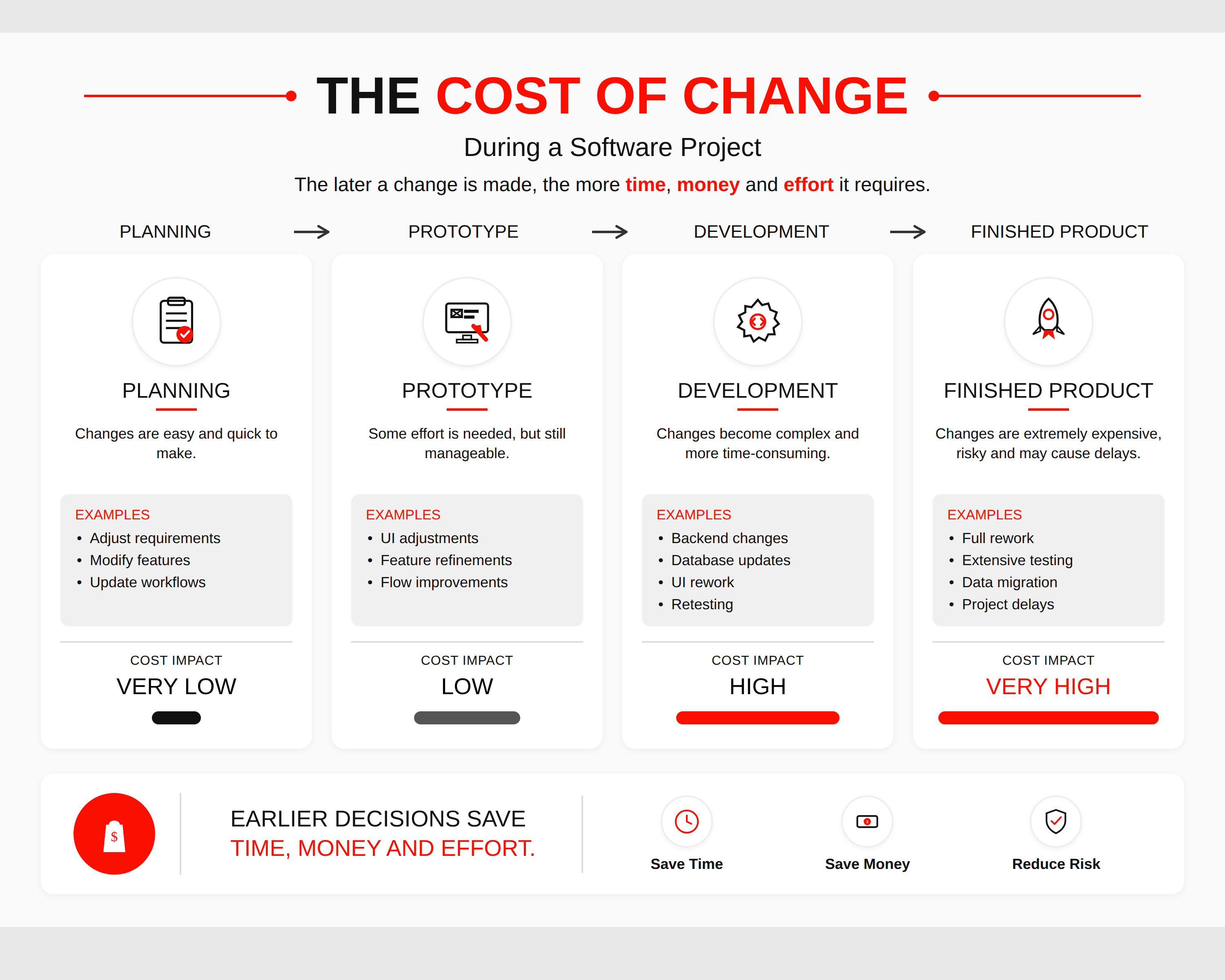
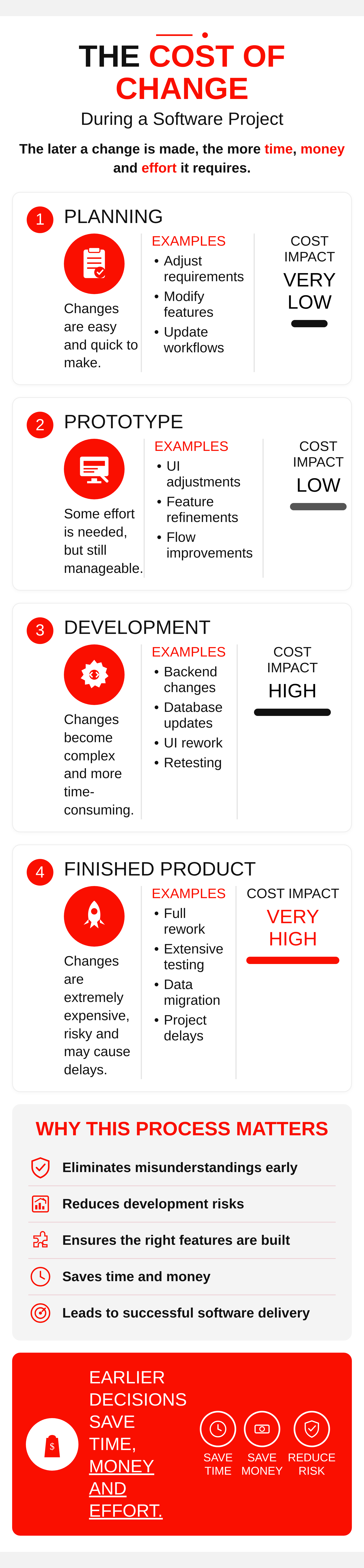
The later a change is made, the more time, money and effort it requires. Prototyping catches expensive problems early — when fixes are fast and cheap.
Why skipping the prototype usually creates problems
Most software projects that exceed budget or fail do so because the requirements were not fully understood at the beginning.
Discovering needs too late
Business owners often discover new needs while seeing the software evolve. Without a prototype, these discoveries happen during coding — and changing software during development is expensive.
Hidden complexity
Features that sounded simple become more complex during development. A small change in the planning stage may take 5 minutes, but the same change during development could require rewriting backend systems, changing database structures, and redesigning interfaces.
Different visions
Different people imagine the final software differently. Without a shared visual reference, the client and developer may be working toward completely different goals.
Forgotten details
Important workflow details are forgotten until much later. Without a prototype, these gaps lead to delays, rework, and frustrating cycles of revision during the most expensive phase of the project.
The prototype saves time and money
Some clients initially think: "Why should I pay for a prototype instead of going directly into development?" The answer is simple: because the prototype prevents expensive mistakes.
Identify misunderstandings early
Catch mismatches between what you envision and what the developer understands — before a single line of code is written.
Simplify unnecessary features
Remove complexity that does not serve your business goals, reducing both cost and development time.
Improve workflows before coding
Test and refine every user journey while changes are fast and inexpensive.
Accurate project estimation
Only after the prototype is completed can we provide a realistic timeline and reliable cost estimate.
Reduce unexpected costs
Eliminate surprise expenses that typically arise from unclear or misunderstood requirements.
Avoid rebuilding features
Prevent the costly cycle of building, discarding, and rebuilding features that were never clearly defined.
Why we make the prototype a paid service
Creating a professional prototype is not a quick sketch. It is real project work that often determines whether the final software project succeeds or fails. For this reason, we treat prototyping as a professional consulting and planning service, not a free sales step.
- Business analysis
- Workflow planning
- Technical architecture decisions
- UI/UX design
- Feature definition
- Multiple feedback sessions
- Revisions and improvements
Our prototype process
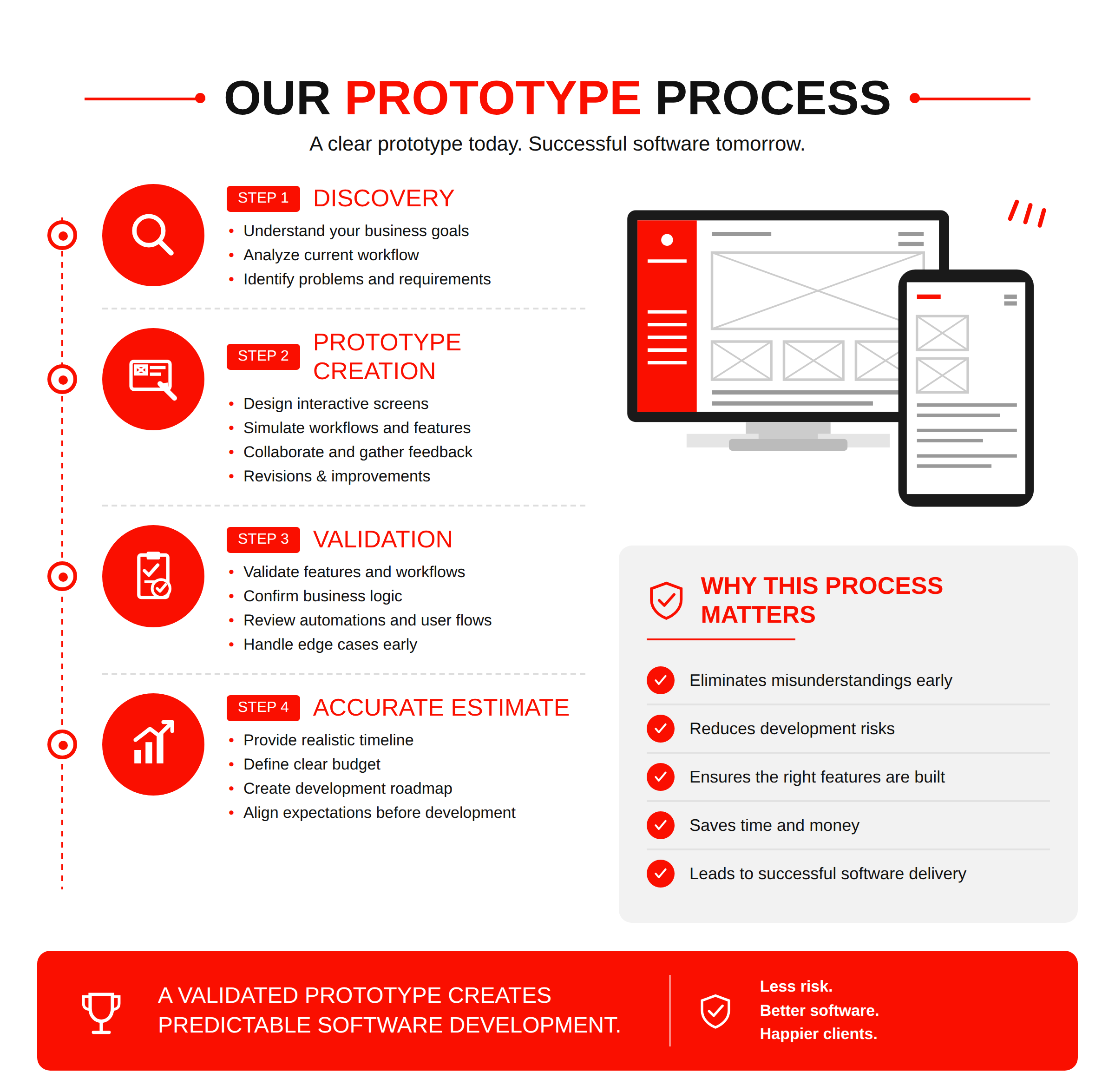
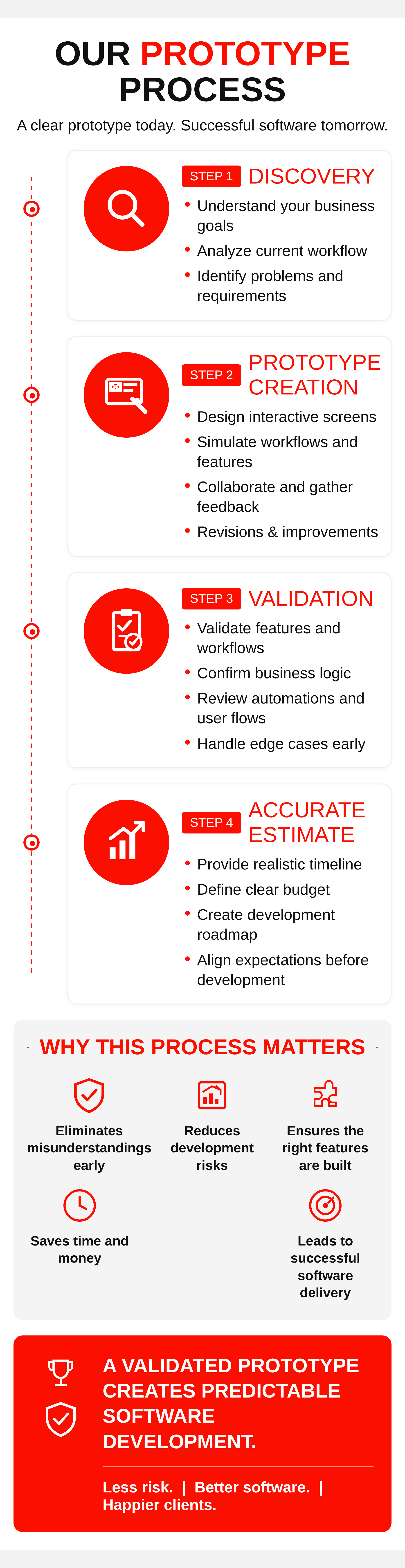
A clear prototype today leads to successful software tomorrow. Our structured approach eliminates misunderstandings, reduces risk, and ensures the right features are built.
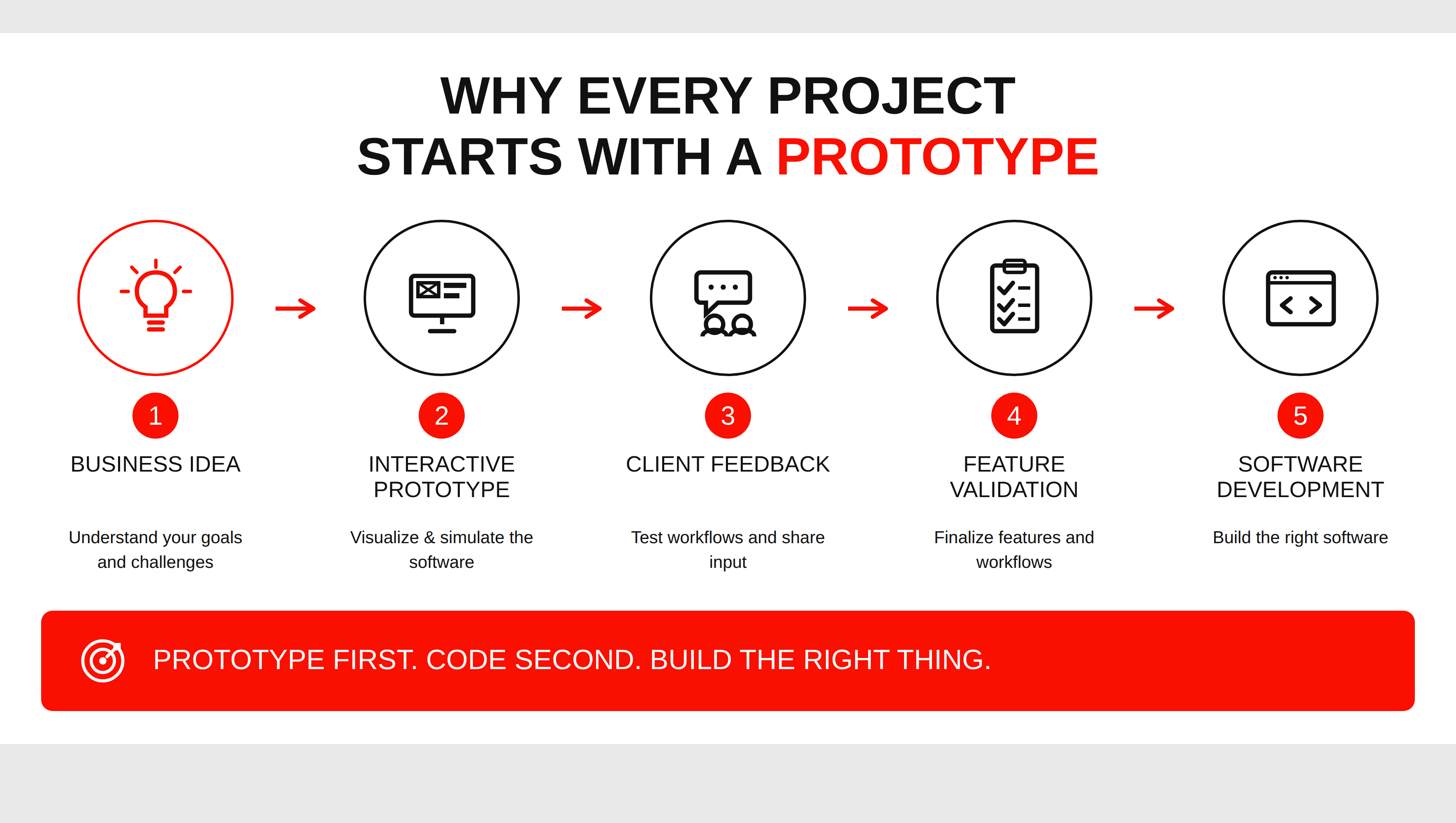
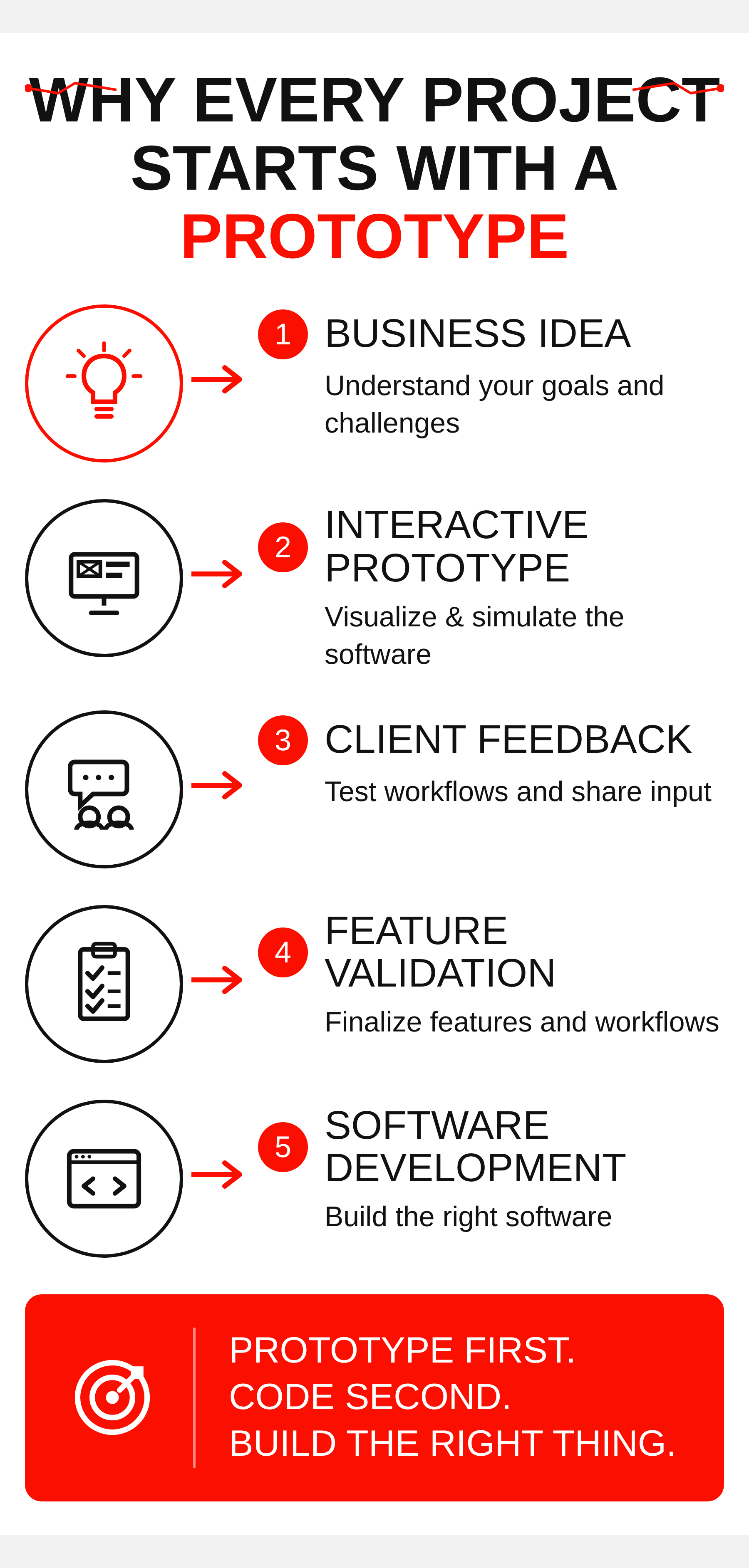
How our prototype process works
A structured, collaborative approach to defining your software before development begins.
Initial Discovery
We discuss your business, your current workflow, the problems you want to solve, and your goals for the software.
Prototype Creation
We create the first version of the prototype and refine it together through regular feedback sessions.
Feature Validation
Before development begins, we verify workflows, screens, user actions, automations, edge cases, and business logic.
Accurate Estimate
Only after the prototype is completed can we provide a realistic timeline, reliable cost estimate, and proper development roadmap.
Typical timeline
Exact costs and timelines are confirmed only after the prototype phase is completed. This protects both the client and the developer from unrealistic expectations.
Prototype Phase
- Faster when feedback is provided daily
- Includes revisions and collaboration sessions
- Lays the foundation for successful development
Development Phase
- Built on a clear, validated blueprint
- Fewer surprises and scope changes
- On-time, on-budget delivery
The prototype is the foundation that makes successful development possible
Our goal is not simply to "write code." Our goal is to help you build software that solves real business problems, fits your workflow, stays within budget, avoids expensive surprises, and can actually be used effectively once completed.
The prototype phase is the safest and most professional way to achieve that.
Entrust yourself to the experts. Intellidesign Ltd is Adobe Official Software Supplier since 2019.
Start your free consultation
Fill in the form below and we'll get back to you with a tailored proposal, timeline, and cost estimate — completely free of charge.
Subscribe now to Our Newsletter Our Newsletter
and get updated with new articles from our blog. All your information is completely confidential.